22.01.27
Klub Katarakt 21: Freitag
OEIN / Peter Kutin / Patrik Lechner / Marta Zapparoli
Dates
1/22/27
6:00 PM
The second day begins with a lecture in which members of the OEIN discuss the ensemble’s work. The presentation takes place in cooperation with the Verband für aktuelle Musik Hamburg e. V.
In the first concert, Austrian artist Peter Kutin, together with Patrik Lechner, presents ROTOЯ – SONIC BODY, a kinetic audio-video-light sculpture in a furious and hypnotic live performance. The sculpture, consisting of four circularly arranged speakers with lights, rotates around its own axis. As it accelerates, states are reached in which the sculpture transcends into a hologram-like sound body and generates complex multimedia polyrhythms. Due to the high speed, it is no longer possible to perceive the movement in detail. Instead, lines, colors, surfaces, and sounds whiz past the viewer. Image and sound combine to create a dizzying and surreal three-dimensionality—a interplay of visibility and invisibility, reality and virtuality, visual abstraction and acoustic impact.
ROTOЯ – SONIC BODY received the International Jury Prize at the 27th Videomedeja Festival in Novi Sad in 2023.
Following this, in its second concert, the OEIN will perform works by (Latin) American composers who view indigenous instruments and practices not as fixed traditions, but as active fields for contemporary experimentation. The score itself becomes the subject of inquiry. In the works by Tania Rubio (Argentina), Raven Chacon (USA), Matías Rosales (Chile), and Carlos Gutiérrez (Bolivia), conventional notation is abandoned, expanded, or confronted with other systems of representation: field recordings and instrumental mapping derived from ecological research; graphic symbols whose interpretation reveals assumptions about indigenous identity; polygonal and circular structures translated into rhythm and gesture; and networks of pan flute sounds arising from the Aymara concept of a ch’ipa—an interwoven structure held together by tension and interdependence.
What connects these very diverse works is not the notion of “indigenous music,” but the question of how music can be organized and conveyed: how a sound becomes part of a collective, how knowledge takes the form of a diagram, a landscape, a symbol, a gesture, or an interwoven rhythm, and how listening changes when these relationships are made audible.
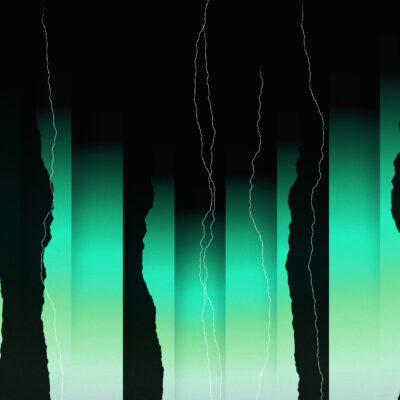
The Italian artist Marta Zapparoli will perform at the night concert. She explores the intersections between physics, technology, and the invisible natural and technological environment. She uses antennas—some of which she builds herself—radio receivers, sensors, and analog technology for site-specific installations, performances, and compositions. At klub katarakt, she will present her work *Interdimensional Generated Space*, an audiovisual interpretation of the Northern Lights. In this piece, Zapparoli combines natural radio phenomena she recorded in Norway with electromagnetic waves, light projections, and high-frequency signals. The piece is a sonic dialogue between natural and technological worlds and a reflection on humanity’s relationship with nature in the Anthropocene, an era in which technology often imitates the wonders of the natural world.